Springs · Marywood Meadows
Garage Door Track Repair or Replacement in Marywood Meadows
After a decade of slushy winters the bottom foot of the track is flaking rust. A roller squeals as it passes, and the channel edge has gone rough and thin where the salt collects.
Garage Door Track Repair or Replacement
In plain words
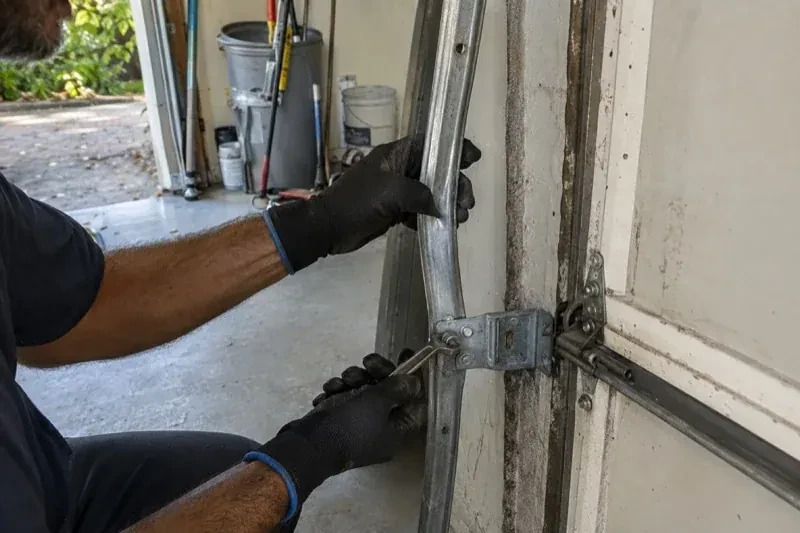
Track has to be in the right place, not merely straight. Each vertical run is set plumb with a slight taper away from the jamb at the top, so the door presses against its stop when closed and swings clear as it opens. The gap between track and door edge is equal on both sides. The horizontal runs are level with each other, square to the vertical runs and matched in radius so the door turns the curve without twisting. Track repair measures all of this and resets whatever has drifted, because a door is only as smooth as the path it is given.
How the visit goesThe garage floor has settled at one corner, and the door now scrapes the concrete on that side while daylight shows at the other. The track on the low side sits crooked against a jamb that has split.
Marywood Meadows
How the visit goes
Plumb, spacing and taper of each vertical run
A level goes on each vertical track, and a tape measures the gap between the track and the edge of the door at the top and the bottom. The run should be plumb, and the two sides should sit the same distance from the door so both columns of rollers carry evenly. There is also a deliberate detail: the top of the vertical track stands a little further from the jamb than the bottom, so the closed door presses into its stop moulding for a seal and swings clear the moment it starts to rise. A track pushed flat to the jamb makes the door drag; one standing too far out lets it rattle.
Rollers, hinges and fixtures damaged when the door bound
A door that has been catching on bad track usually has a few parts that suffered with it. Rollers with flat spots or bent stems are replaced, hinges that split when the door twisted are renewed, and top fixtures knocked out of line are reset so the top roller sits at the right depth. Each roller is confirmed to turn and slide freely. The channel is wiped clean of grit and old grease, and the moving parts are lubricated to the door's own manual, since track advice varies by maker. Attending to these pieces while the door is held and the track is fresh saves a second visit and stops the new alignment being chewed up by the old damage.
A monthly look at the brackets and hangers
Track problems announce themselves early to anyone who looks. Once a month, with the door closed and the light on, run your eye down each vertical track: the brackets should sit flat against the wood with no gap behind them and no screw heads standing proud. Then look up at the horizontal runs and the angle hangers holding them; a hanger that has begun to lean or a run that no longer looks level with its partner is worth a call while it is a small adjustment. Finish by watching the door open once, checking that every roller stays in its channel through the curve, which is the same check the industry checklist asks for.
Garage Door Track Repair or Replacement
In the van
- Replacement rollers and hinges
- Level, plumb line and square
- Winding bars and track clamps
- Vertical track, two-inch or three-inch
- Track pliers and dead-blow hammer
What affects the quote
Same fees day, night or weekend
1How the door is sitting
A door resting closed is straightforward. One jammed partway on a bent section, or with rollers out of the channel, has to be supported and freed before the track can be measured.
2Access and storage around the track
Shelving, a workbench or a ceiling full of stored goods around the horizontal run slows the work. Clearing the area beforehand changes the time quoted.
3Low-headroom or high-lift hardware
Changing the layout, rather than repairing the existing one, brings new horizontal track, curve pieces, top fixtures and often drums and spring adjustment, and is quoted as a separate scope.
Garage Door Track Repair or Replacement: questions
Why is the horizontal track sagging?
The horizontal run hangs from the ceiling on back hangs of perforated angle, and it sags when a hanger bends, its screws pull out of a joist, or it was only ever fixed into drywall. A sagging hanger droops that run out of level or its intended pitch. The fix is a straight or new hanger screwed into solid framing, with the run set to the manufacturer's specified pitch and matched to its partner; a door that drifts back toward the opening once raised is a separate, balance-related symptom.
Why does the door catch at the same spot every trip?
A catch that repeats in one place is the signature of a local track fault: a dent, a spread section, a step at a joint, or a bracket that has let the track drift. Each roller reaches the flaw at the same point in the travel and bumps over it. The technician finds the spot by running a roller through the channel by hand, then dresses or replaces that length and checks the rest of the run for the same problem.
The wood behind the track is rotten. Can the track still be fixed?
Yes, and the wood is part of the job. Screws will not hold in soft timber, so the technician cuts back to solid wood and sisters a new length of jamb alongside or replaces the lower section, fastening it through to the framing. The brackets are then lag-screwed into the fresh wood and the track set to the door. In older garages this repair is common, and it is what makes the alignment last.
Springs & Hardware
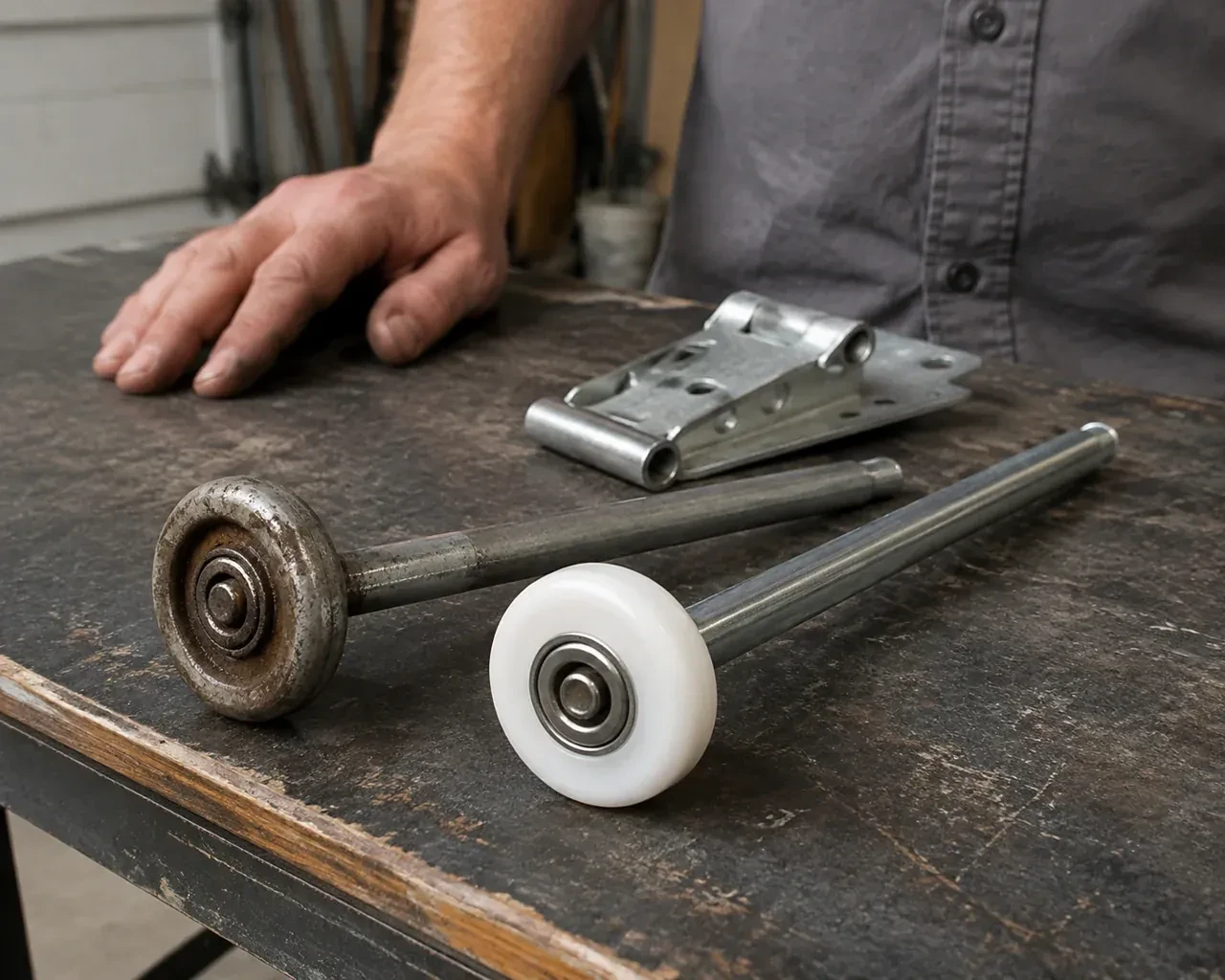
- Garage Door Hinge ReplacementEvery time the door goes up there is a sharp pop from the same spot, about a metre off the floor…
- Garage Door Cable ReplacementSomeone left the snow shovel leaning in the opening and the door came down on it.
- Torsion Spring ReplacementYou heard a sharp bang from the garage, and now the opener hums for a second and gives up.
Garage Door Track Repair or Replacement near you
Whether the door on your house in Marywood Meadows needs a single roller or a whole new opener, the services listed here cover it. Repairs come first, because most doors can be saved; springs, cables and hardware follow; then openers and remotes; and finally new doors for homes and commercial buildings.